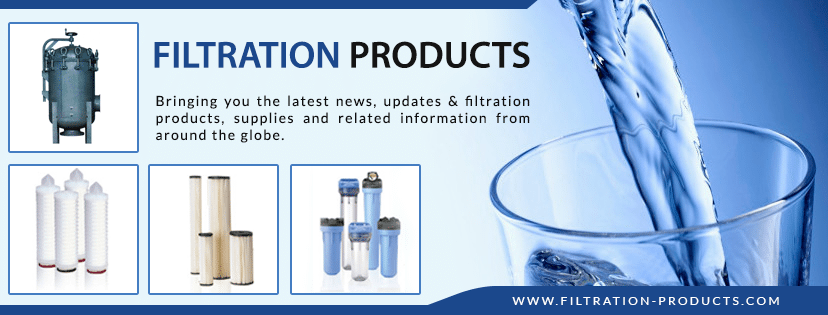
Water purifiers are one of the useful household merchandise that participate in an vital role in creating existence wholesome. With wellbeing consciousness among the the people increasing like in no way in advance of, numerous companies are coming with affordable and serviceable systems of water purifiers.
Water purifiers are practical in these times wherever pollution is at its peak. It is helpful to know the systems at the rear of these water purifiers to make an knowledgeable purchase.
1. Activated carbon filtration: Also named as carbon adsorption procedure, activated carbon filtration, is one of the common approaches used in household water purifiers. In this approach, activated carbon is used to filter the water. Activated carbon, a hugely absorbent substance properly attracts and traps numerous of the widespread impurities in water. Several harmful natural and organic compounds like pesticides, chlorinated solvents and microorganisms are adsorbed by these filters.
•Advantages
a.Activated carbon filters get rid of uncomfortable style and odor of water, which include chlorine.
b.Far more activated carbon in the filter improves the high-quality of water and the lifetime of the cartridge.
c.Electrical power is not demanded
•Drawbacks
a)Water at bigger temperatures influences the efficiency of carbon filters.
b)Minimal lifetime – the moment the surface area of the cartridge will become saturated with adsorbed chemical substances, it simply cannot adsorb much more and that’s why demands to be changed.
c)Carbon adsorption simply cannot get rid of significant metals and dissolved solids in water.
d)Can create carbon fines into the water.
e)Successful when put together with other purification solutions.
2.Ultra-Filtration (UF): Ultra-Filtration is a style of membrane filtration, in which the water is pressured towards the membrane with several very small pores. The pore size of extremely-filtration membranes variety from .01 – .1 micrometers (1 micrometer is one millionth of a meter). This approach of filtration removes dirt, suspended solids, germs, viruses, germs and their eggs, endotoxins and other pathogens, hence produces quite pure water with very low slit density.
•Advantages
a.The size of the smallest virus and germ is much more than .02 micron and that’s why UF approach is effective in eliminating most particles, pathogens, microorganisms, and colloids over their rated size.
b.Really filtered water with considerably less usage of power.
•Disadvantages
a)Ultra- Filtration simply cannot get rid of any dissolved inorganic substances from water.
b)To preserve a substantial strain water circulation, regular cleansing is demanded.
c)Successful when preceded by carbon adsorption or when put together with other purification solutions.
3. Reverse osmosis (RO): Reverse Osmosis is also a style of membrane filtration but the pore structure of RO membrane is significantly smaller (.0001microns) and tighter than UF membranes. This assists the membrane to get rid of 90-99% of the impurities in water, creating it one of the most effective and financial options of water purifying. A single much more distinctive characteristic of a RO purifier is that it removes all the dissolved salts, metals and chemical substances from the water.
•Advantages
a.RO removes several impurities from water like whole dissolved solids (TDS), turbidity, asbestos, guide and other harmful significant metals, radium and numerous dissolved organics.
b.Converts tricky water to gentle water.
c.A combination of RO and carbon adsorption is a most effective procedure.
d.Needs considerably less upkeep.
•Disadvantages
a)Reverse osmosis removes wholesome minerals like calcium and magnesium from the water. Since of small pore size, water circulation is sluggish and that’s why storage tanks are demanded.
b)Chlorine may go as a result of the membrane and can also harm it that’s why a combination of RO and Carbon adsorption is recommended.
c)Costly when when compared to other water purifying solutions.
d)Qualified upkeep is desired
4. Ultraviolet (UV) filtration: The distinctive high-quality of extremely violet mild that kills harmful germs and microorganisms is used in this filtration approach. This approach of filtration is mainly used for disinfecting water. UV mild rays penetrate into the cells of germs and viruses and wipe out their ability to reproduce.
•Advantages
a.An effective UV purifier kills 99.99% of harmful microbes.
b.This approach will not release any chemical compounds into the water.
•Disadvantages
a)Decreases the resistivity of water.
b)Will not get rid of any dissolved salts, particles, or ions from water.
c)Works by using electrical energy.
d)Needs experienced upkeep.
These systems, when used in combination of two or much more systems, will yield improved success than when used separately.






Leave a Reply